A study of how people experience metro stations beyond their role as transit infrastructure. Through user profiling, on-site observation, behavioural mapping, and spatial analysis, I examined how the design of public edges influences movement, interaction, and everyday use across three Delhi NCR stations.
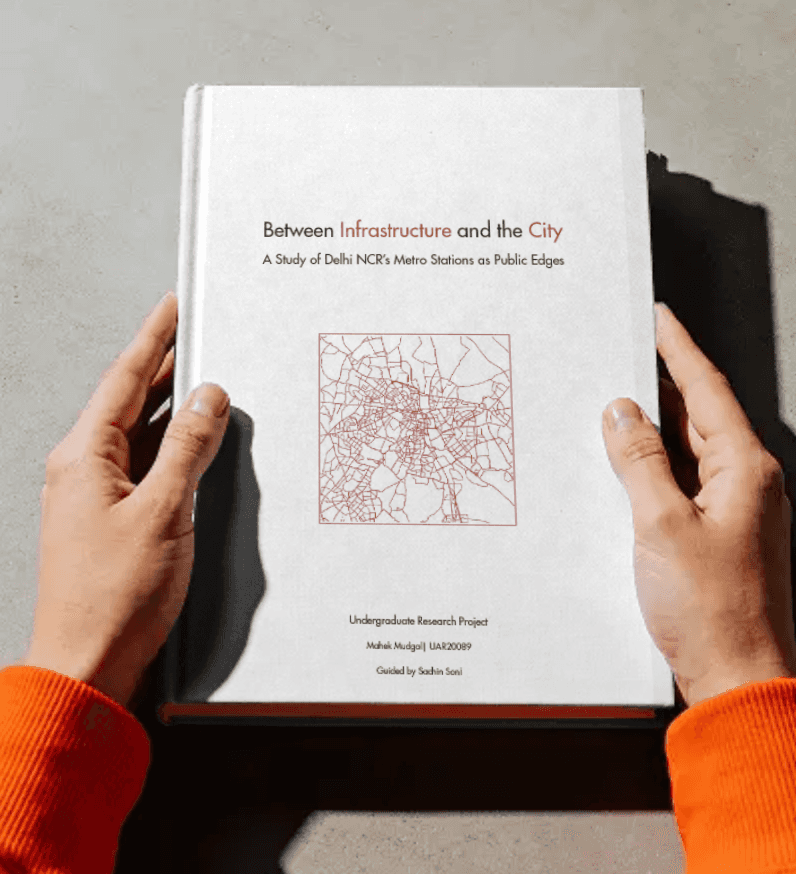
A study of how people experience metro stations beyond their role as transit infrastructure. Through user profiling, on-site observation, behavioural mapping, and spatial analysis, I examined how the design of public edges influences movement, interaction, and everyday use across three Delhi NCR stations.

USER INSIGHTS
A successful metro station must respond not only to how people travel, - but to how they work, rest, interact and move through the city.
OBSERVATION
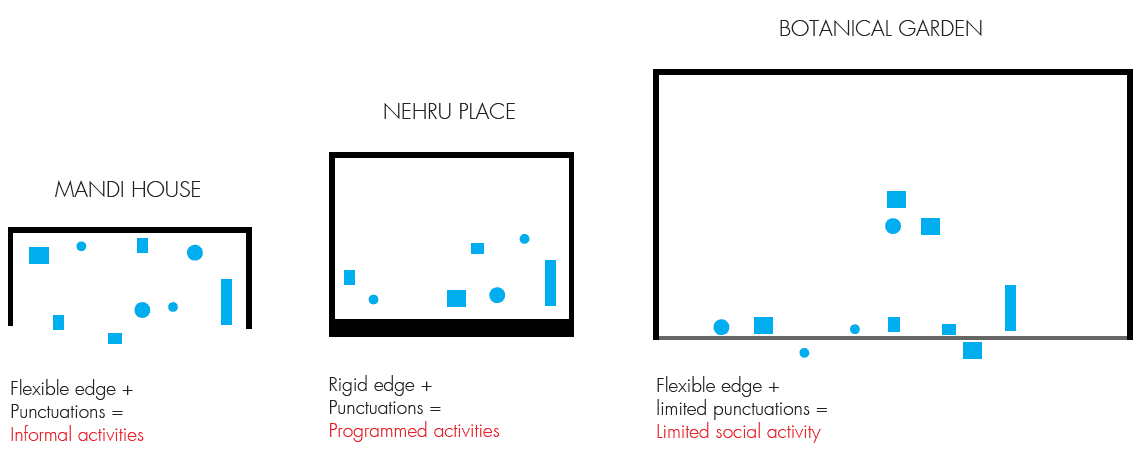
Observed and mapped how people actually used metro station edges versus how they were designed to be used — identifying which spaces people chose to occupy, linger in, and avoid.
OBSERVATION
Observed and mapped how people actually used metro station edges versus how they were designed to be used — identifying which spaces people chose to occupy, linger in, and avoid.
IMPLICATION
Discovered that physical barriers determined who could access a space — stations with open, porous edges allowed informal vendors and diverse users, while closed facades restricted access to a narrower, more affluent demographic.
CONCLUSION
The comparison shows that spatial conditions directly shape how people engage with metro stations: Mandi House’s open, inviting edges support lingering, interaction, and informal activity, while Nehru Place’s gates, barriers, and security create a more controlled and exclusionary experience.

Copyright © 2026 Mahek Mudgal. All Rights Reserved.

Copyright © 2026 Mahek Mudgal. All Rights Reserved.

Copyright © 2026 Mahek Mudgal. All Rights Reserved.